
 Melky
Melky 
Programmatic Authority: The architecture of infinite scale

Programmatic Authority is the systematic orchestration of data-driven architectures to fill the silent voids within the Knowledge Graph.
It is the engineering of an information ecosystem that scales influence without human friction.
While the market remains trapped in the low-leverage cycle of “automated content,” we are building the Architecture of Scale.
I can frame it as a deliberate pivot from manual exhaustion to the calculated elegance of structured logic.
The contextual decay: Why the “artisan” publisher is invisible
The “artisan” approach has failed because it relies on the broken premise that search engines reward “effort.” They do not. They reward Information Gain.
Traditional publishing—hand-crafting every page—reaches a point of diminishing returns. When your team recycles the same consensus found in the top 10 search results, you are creating noise, not value. You are invisible to the machine because you provide zero novelty.
You must transcend the “Content Treadmill” by shifting your identity from a publisher to an architect. But before you build, you must choose your blueprint.
The taxonomy of scale: Aggregators vs Database-led models
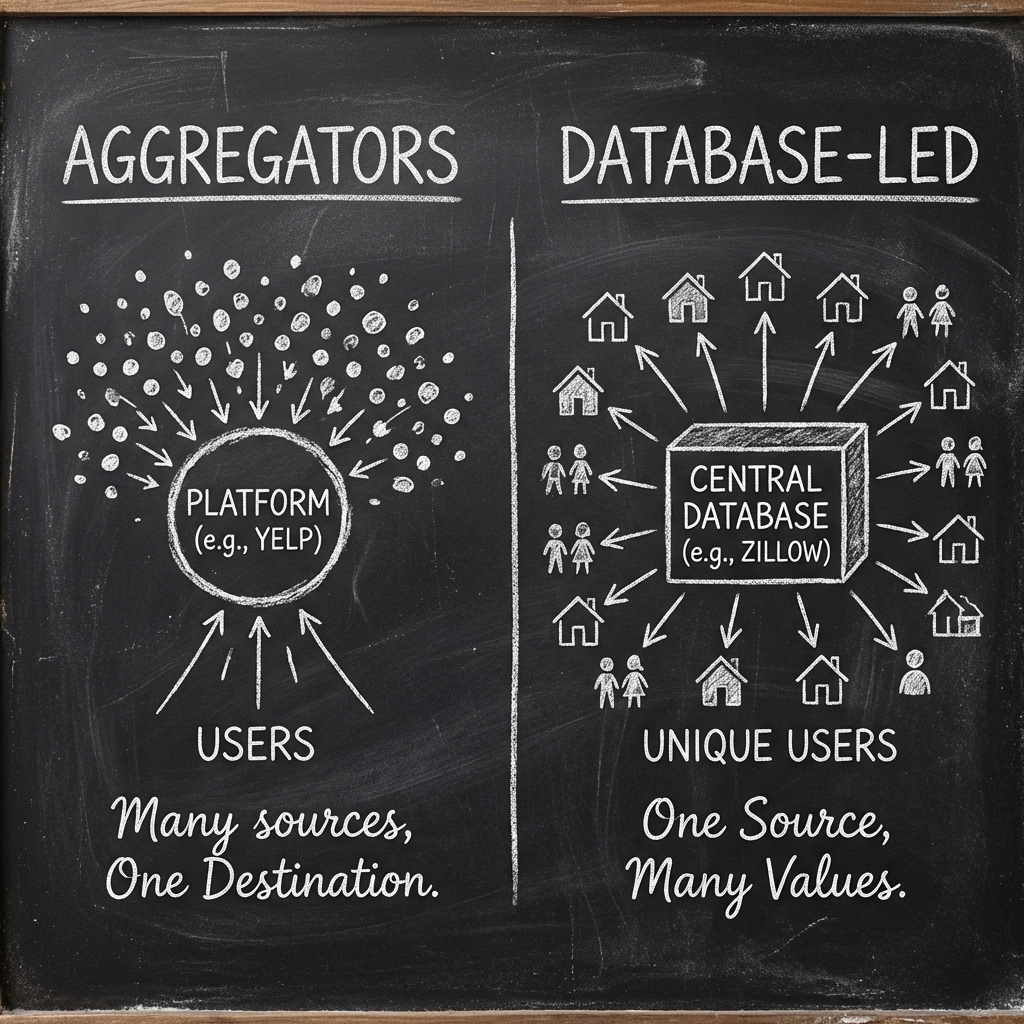
The taxonomy of Programmatic Authority is defined by two distinct models of information retrieval: Aggregators and Database-led engines.
- Aggregated Authority: Collecting public data points to create a comprehensive comparison node (e.g., Yelp, TripAdvisor). You win by having the most “Entities” in a specific category.
- Database-led Intelligence: Using proprietary or hard-to-access data sets to answer specific user queries with absolute precision (e.g., Zillow, Fintech dashboards). You win by having the most unique “Attributes.”
To the strategic leader, the goal is rarely to be a better aggregator; it is to be a more unique Data Source. This distinction determines your standing in the Trust Economy and informs your approach to function-first distribution.
The semantic mechanism: The Entity-Attribute-Value model
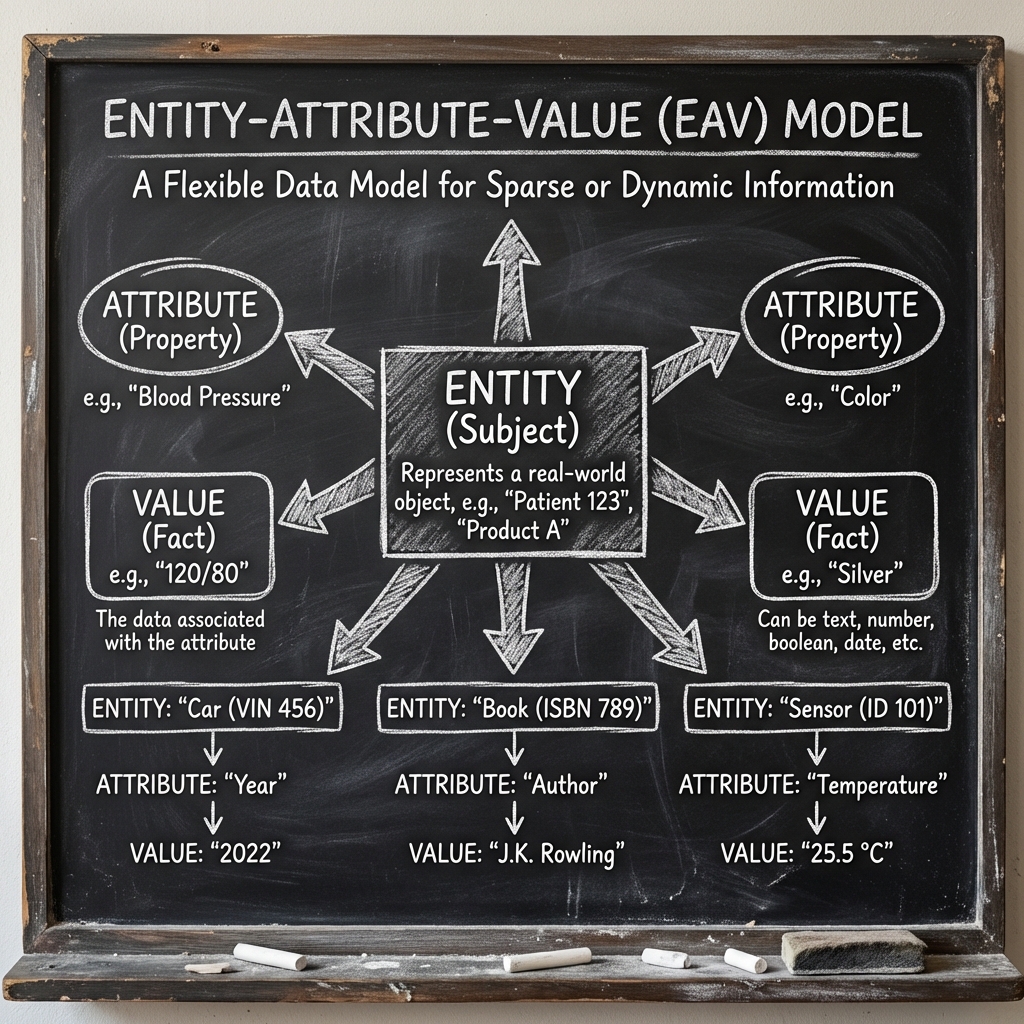
The Entity-Attribute-Value (EAV) model is the atomic structure of the Knowledge Graph, organized into Triples that define the world.
- Entity: The Subject (e.g., A specific software tool).
- Attribute: The Property (e.g., Pricing, API capabilities).
- Value: The Fact (e.g., $49/mo).
Machine intelligence does not search for stories; it extracts Values.
When you structure your data into these semantic nodes, you make it “cheap” for the engine to understand your expertise. This optimizes for the Cost of Retrieval and validates your entity as the definitive source of truth.
To dominate, you must liberate the data that is currently silent.
Orchestrating the asset: Filling the data voids
To orchestrate Programmatic Authority, you must identify and fill Data Voids, mountainous regions of information that exist in cold, unstructured formats (CSVs, private APIs, government records).
The Protocol for Scaling Voids:
- Extraction: Liberate unstructured data from silent sources.
- Contextual Wrapping: Wrap the raw facts in your proprietary aura. In Fintech, do not just show a stock price (Commodity); wrap it in your Volatility Index (Asset).
- Template Seduction: Design landing pages that serve as authoritative wrappers, generating thousands of unique nodes the moment you hit “Deploy.”
But generation is only the beginning. You must protect your nodes from the erosion of the web.
The lifecycle of a node: Avoiding web decay
The lifecycle of a programmatic node must be managed to prevent Web Decay—the loss of authority due to stale data or thin content signals.
- Phase 1: Generation. Creating the node with high Information Gain.
- Phase 2: Indexing. Ensuring the “Cost of Retrieval” is low enough for search engines to crawl 50,000+ pages efficiently (using Headless architectures and API-first delivery).
- Phase 3: Refresh Dynamics. Automatically updating Values (e.g., live pricing or real-time stats) to signal to the algorithm that the page is a living entity, not a ghost.
If you fail to refresh your nodes, you are building a graveyard, not an empire.
The Information Gain mandate
Google’s 2024 Patent (“Contextual Estimation of Link Information Gain”) confirms that the algorithm is now designed specifically to penalize redundancy and reward novelty.
The data dictates that:
- Novelty over Noise: Pages with high Information Gain scores outrank those that merely rehash the consensus.
- Entity Density: Validating your brand’s relationship to thousands of unique data points strengthens your Topical Authority faster than any backlink campaign. This is the definitive shift from links to entities.
- Predictive Intent: A programmatic architecture allows you to anticipate the user’s next information need, positioning your brand as the destination for the entire journey.
By fulfilling this mandate, you stop competing for attention and start commanding it.
Qualitative measurement: Reclaiming brand authority
You verify success when you monitor the shift from “Keyword Ranking” to Brand Search Volume.
True authority does not beg for a click; it commands a navigational query. When users start searching for “[Your Brand] + [Data Set],” you have won.
You are no longer a commodity in the feed; you are a destination.
Monitor the crawl rate of your programmatic nodes. If the machine is eating your data, you are imprinting the graph.
Build, don’t beg
You build without begging by commanding your team to answer:
“What secrets are we sitting on that the Knowledge Graph is starving for?”
If the answer is “none,” you do not have a content problem. You have a Data Deficit.
Fix the architecture, and the authority will follow.
Share Article
If this article helped you, please share it with others!
Some content may be outdated