
 Melky
Melky 
The death of keyword density and other SEO myths

Keyword Density defines the percentage of times a target keyword appears on a webpage relative to the total word count. Search engines previously utilized this metric for ranking, but modern Information Retrieval systems prioritize semantic relevance and entity coverage over simple string frequency.
The evolution of search algorithms has rendered keyword density obsolete. Information Retrieval (IR) systems now calculate relevance based on the comprehensive coverage of a topic (Topical Authority) rather than the repetition of specific terms. High keyword frequency often signals low-quality content or “keyword stuffing,” which increases the Cost of Retrieval for search engines.
How has Google’s approach to keywords changed?
Google’s search algorithms have evolved from lexical matching to semantic understanding through Natural Language Processing (NLP) models like BERT. This shift separates the Search Query (literal string) from the Search Intent (user goal), requiring content to satisfy the underlying need.
Historical search engines functioned as simple indexers that matched query strings to document strings. Modern systems utilize vector space models to understand the relationship between words.
- Search Query represents the specific sequence of characters a user inputs.
- Search Intent represents the abstract goal or problem the user intends to resolve.
confusing these two distinct concepts leads to optimization failures. A user searching for “apple not charging” requires a troubleshooting guide (Solution), not a page that repeats the phrase “apple not charging” (String Match).
Why is Search Intent crucial for ranking?
Search Intent serves as the primary ranking signal because search engines optimize for user satisfaction and lower retrieval costs. Content that directly resolves the user’s specific problem reduces the need for further queries, signaling high relevance and authority to the algorithm.
Content creation strategies must align with this shift:
- Old Model: Keyword Research → Keyword Insertion → Link Acquisition.
- New Model: Intent Analysis → Answer Creation → Semantic Structuring.
The algorithm evaluates whether a document satisfies the user’s intent. The AI Retriever seeks the most accurate answer to the implicit question behind the query.
What is the Intent Hierarchy Framework?
The Intent Hierarchy Framework structures content by categorizing user needs into Primary, Secondary, and Tertiary intents. This methodology ensures a single document serves the main query while addressing related sub-topics and linking to auxiliary documents, creating a comprehensive topical map.
Structuring content requires a clear hierarchy of user needs:
- Primary Intent: The explicit question the user queried. This must be addressed in the Title, H1, and opening section.
- Secondary Intent: The immediate follow-up questions arising from the primary answer. These belong in H2 or H3 sections within the same document.
- Tertiary Intent: Adjacent topics that broaden the scope. These require separate documents linked via semantic anchors.
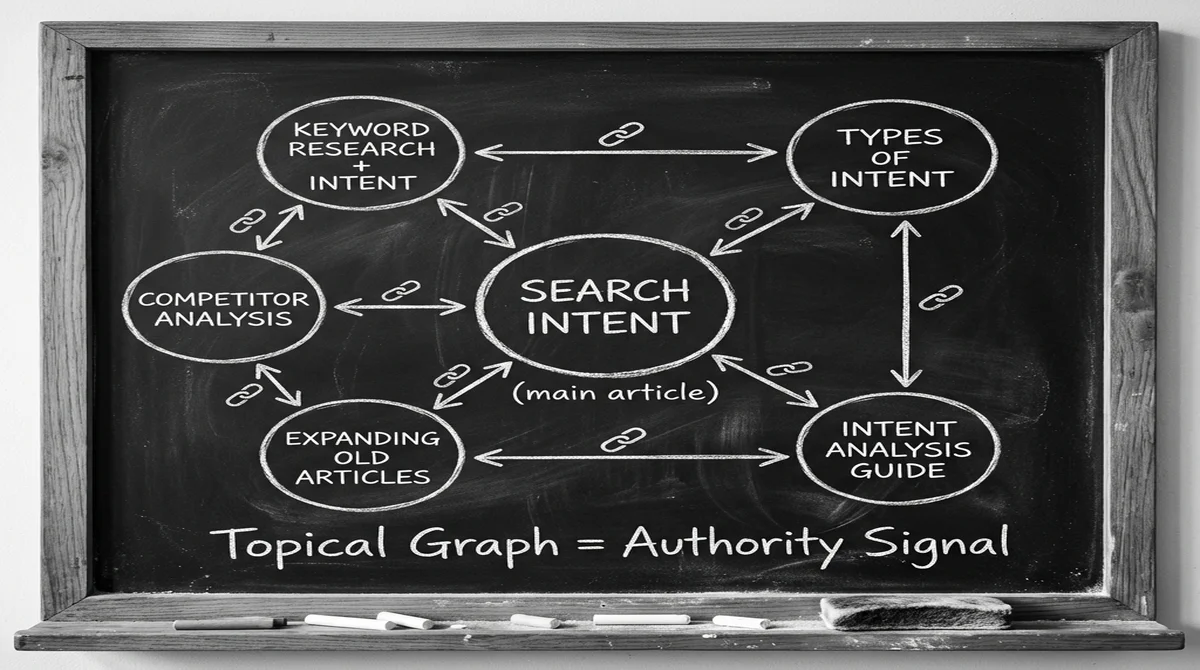
This structure allows the creation of a Topical Graph. A central hub page covers the core concept, while spoke pages cover specific attributes or sub-topics.
- Macro Context: What is search intent? (Hub)
- Micro Context: How to perform intent analysis? (Spoke)
- Micro Context: Keyword research for intent (Spoke)
How should Anchor Text be optimized?
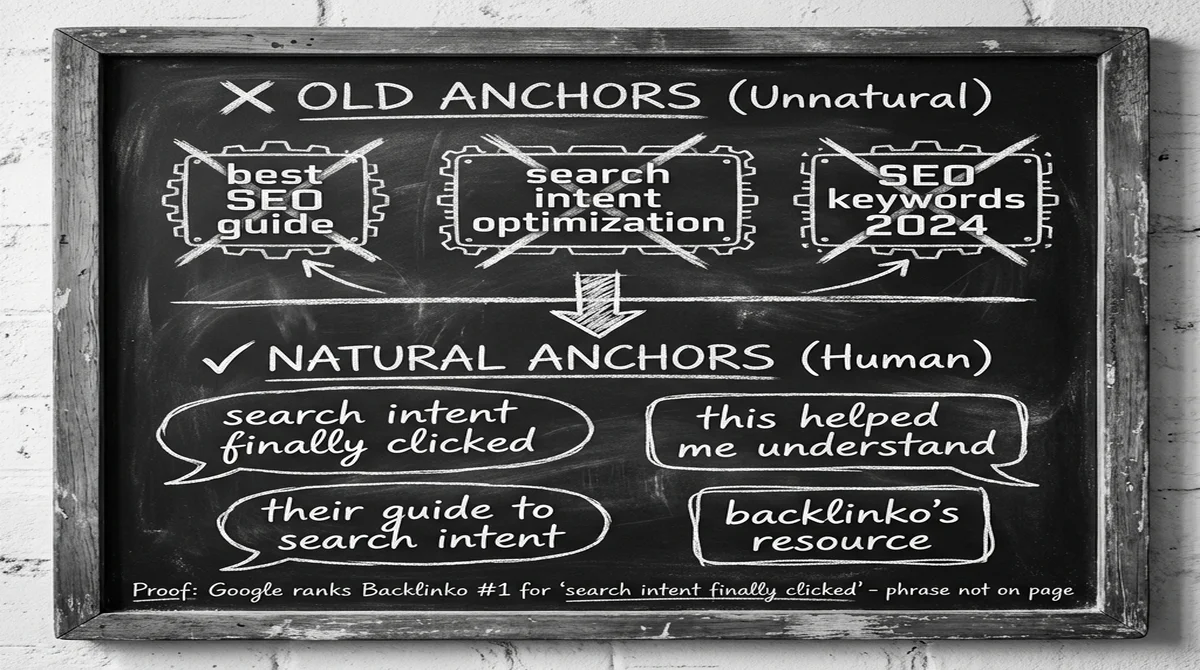
Anchor text optimization requires using natural language phrases that describe the destination page’s Macro Context. Search engines analyze the surrounding text to understand the relationship between documents, meaning contextual relevance provides stronger signals than exact-match keywords or generic terms.
Natural Language Processing models analyze the text surrounding a hyperlink to infer the content of the linked page.
- Exact Match: “best accounting software” (High manipulation signal)
- Semantic Match: “accounting software integration guide” (High contextual signal)
A natural anchor profile reflects how humans cite sources. Phrases such as “search intent finally clicked” or “guide to search intent” provide context without triggering spam filters.
Is Contextual Relevance superior to Niche Relevance?
Contextual relevance within a document carries more weight than domain-level niche relevance for semantic evaluation. A link embedded in a semantically aligned section conveys precise meaning to the search engine, establishing a valid connection between two entities regardless of the broader domain topic.
A link from a high-quality article about “Productivity” that mentions a “Project Management Tool” provides more value than a link from a low-quality “Software Directory.” The semantic bridge between the topic (Productivity) and the entity (Project Management Tool) validates the relationship.
How does Site Authority affect content ranking?
Site Authority acts as a trust signal that propagates credibility to new content through established internal link networks. A domain with a complete Topical Map and verified expertise allows new documents to rank faster by inheriting value from existing high-quality nodes.
Site Authority functions as a cumulative asset. A Topical Graph connects individual documents into a unified knowledge base.
- Page-Centric Model: Individual pages compete for strict keywords.
- Entity-Centric Model: The domain establishes authority on a specific subject.
Publishing a new document within a well-structured Topical Graph allows it to leverage existing authority. Internal links facilitate the transfer of PageRank and semantic relevance.
How to analyze Search Intent effectively?
Analyzing Search Intent involves examining the Search Engine Results Page (SERP) to identify the dominant content formats and user goals. This process reveals gaps in the current information landscape, allowing publishers to create content that serves unmet needs or provides superior depth.
SERP analysis identifies the algorithmic preference for a query:
- Content Type: Informational, Transactional, or Navigational.
- Format: Listicle, Guide, Tool, or Video.
- Content Gap: Missing information or shallow coverage in top results.
A query such as “types of search intent” may return generic guides. Creating a dedicated, comprehensive document on this specific attribute fills a content gap and establishes authority.
Conclusion
The shift from Keyword Density to Semantic Search optimizes the Information Retrieval process. Search engines reward documents that reduce the Cost of Retrieval by providing structured, chemically accurate, and comprehensive information.
This is part of the “AI Search? It’s Just Search, Rebranded” series.
Share Article
If this article helped you, please share it with others!
Some content may be outdated